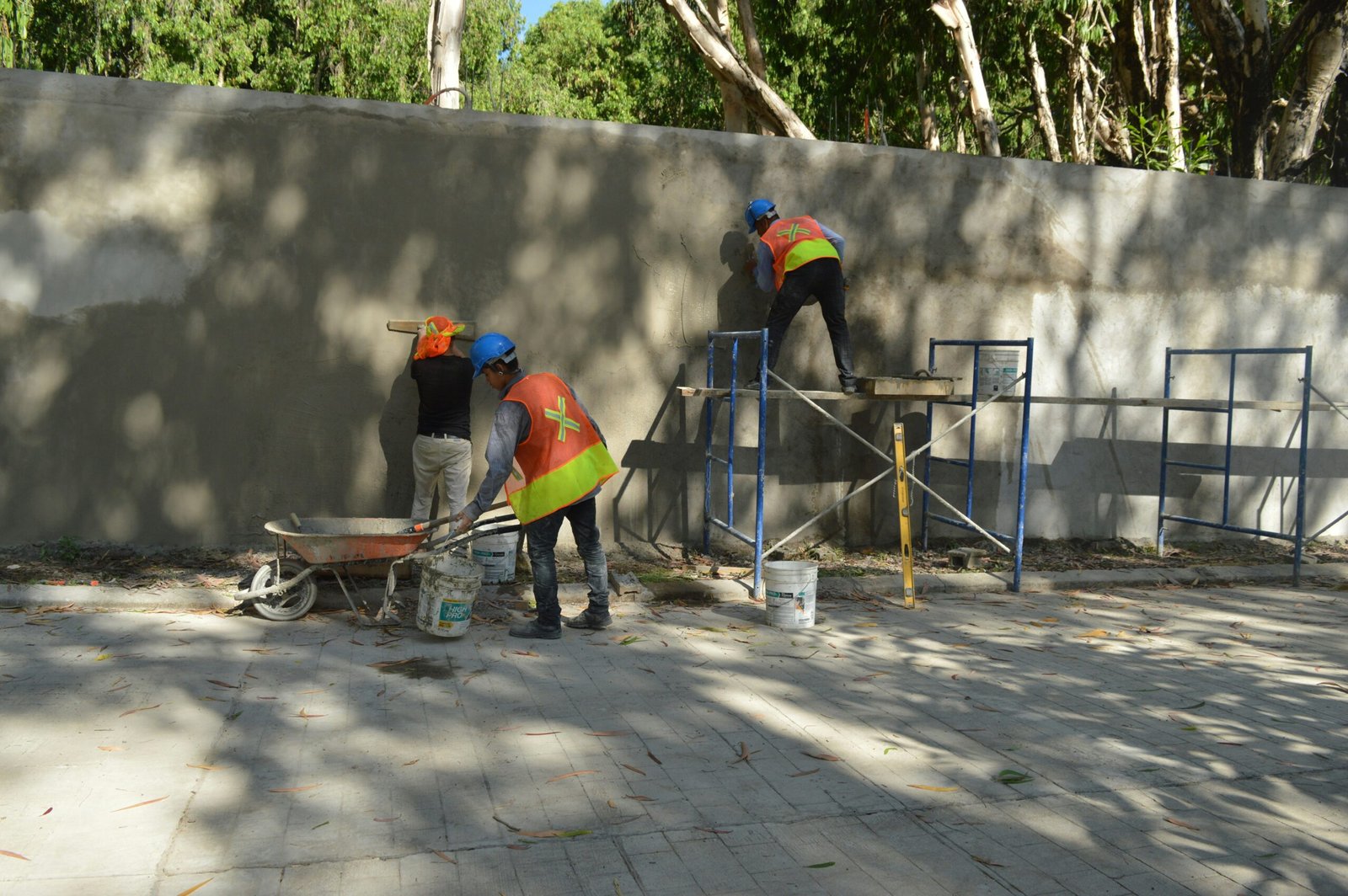
When it comes to reinforcing concrete slabs beneath storage buildings, the core idea is to ensure the slab can adequately support the weight and stresses it will face over its lifetime. This typically involves incorporating steel reinforcement, like rebar or welded wire mesh, within the concrete to enhance its tensile strength and control cracking. The specific method and materials depend heavily on the building’s purpose, the intended loads, and the existing slab’s condition.
A concrete slab, while strong in compression, is relatively weak in tension. This means it can handle a lot of downward pressure but struggles with forces that try to pull it apart or bend it. Storage buildings, especially those holding heavy inventory or housing vehicles, exert significant loads on their foundation slabs. Without proper reinforcement, these slabs are prone to cracking, shifting, and structural failure.
Preventing Cracking and Movement
Reinforcement helps distribute stresses more evenly across the slab. Think of it like a net; when one part is pulled, the tension is spread through the whole net, preventing a single point from tearing. This is crucial for controlling thermal expansion and contraction, as concrete naturally expands and shrinks with temperature changes. Without reinforcement, these movements can lead to extensive cracking.
Supporting Heavy Loads
Storage buildings often deal with concentrated loads from shelving, palletized goods, or even industrial vehicles. An unreinforced slab might sink or crack under these pressures. Reinforcement, particularly strategically placed rebar, acts as a skeleton, allowing the slab to carry much heavier weights without failing.
Addressing Soil Conditions
The ground beneath a slab isn’t always perfectly stable. Soil can settle, expand, or contract, creating differential settlement – where one part of the slab sinks more than another. Reinforcement helps the slab bridge over these inconsistencies, reducing the impact of minor subgrade variations.
Reinforcing New Concrete Slabs
For new construction, integrating reinforcement is a straightforward part of the design and pouring process. The goal is to build a slab that’s robust from day one.
Rebar Grids and Welded Wire Mesh
The most common methods involve using rebar (reinforcing bars) or welded wire mesh. Rebar is typically used for heavier-duty applications or where precise control over reinforcement is needed. For metal storage buildings, a rebar grid or welded wire mesh, spaced at 12-18 inches seems to be a common recommendation. It’s essential that this reinforcement is elevated off the base, typically in the bottom third of the slab’s thickness, to be effective where tensile stresses are highest. This is often achieved using “chairs” or “dobies” which are small plastic or concrete spacers.
Double Perimeter Rebar for Anchors
Where anchor bolts will be installed, such as for the building’s structural frame, it’s wise to include double perimeter rebar. This provides localized strengthening around these critical connection points, helping to distribute the forces from the anchors into the slab and prevent breakout or cracking around them.
Determining Slab Thickness
Slab thickness is a crucial factor driven by the anticipated loads. For lighter storage, a 4-inch slab might suffice, while for industrial applications supporting vehicles, 6 inches or more is often recommended. When designing for facilities like ASRS (Automated Storage and Retrieval Systems) warehouses, which can support enormous loads (e.g., 150,000 lbs on a 120-foot ASRS), engineers need to work closely with rack manufacturers. This collaboration ensures the slab design accounts for stress distribution and the specific requirements for anchor bolt lengths and their pull-out strength.
Strengthening Aging Industrial Slabs

Existing storage buildings, particularly older industrial structures, might find their slabs are no longer adequate for modern storage demands or heavier loads. Fortunately, there are several effective strategies for strengthening these aging slabs.
Bonded Concrete Overlays
One common approach is to add a bonded concrete overlay. This involves pouring a new layer of concrete on top of the existing slab. The key here is “bonded” – proper surface preparation of the existing slab is critical to ensure a strong, monolithic connection between the old and new concrete. This increases the overall thickness and, consequently, the load-bearing capacity of the slab.
Carbon Fiber and Fiberglass Fabrics
For enhancing flexural strength and controlling cracks without significantly increasing the slab’s mass or thickness, carbon fiber or fiberglass fabrics can be applied. These materials are lightweight but have extremely high tensile strength. They are typically adhered to the surface of the slab using specialized epoxies, forming a composite system that significantly improves the slab’s performance, particularly in areas prone to bending or shear forces. This can be a great option when headroom or weight restrictions are a concern.
Addressing Subgrade Issues
Sometimes, the slab itself isn’t the primary issue, but rather the unstable soil beneath it. In such cases, techniques like slab jacking (also known as mud jacking or concrete lifting) or chemical grouting can be used to stabilize the subgrade and lift settled sections of the slab. This addresses the root cause of the problem and prevents further settlement.
Cost Considerations for Reinforced Slabs

The cost of a reinforced concrete slab can vary significantly based on factors like thickness, type of reinforcement, geographic location, and project scale. It’s helpful to have a general idea of these costs for budgeting purposes.
General Cost Estimates
For a basic 4-inch shed slab with wire mesh, you might expect to pay around $4-7 per square foot. However, for more robust residential or industrial slabs with significant rebar reinforcement, costs can range from $6 to $15+ per square foot. These figures are recent, reflecting 2026 cost estimates.
Impact of Reinforcement Type
Adding rebar or fibers definitely adds to the crack resistance and load capacity of the slab, but it also increases the material and labor costs. High-strength rebar, for instance, is more expensive than basic welded wire mesh. Similarly, incorporating advanced materials like carbon fiber composite systems will be at the higher end of the cost spectrum due to material expense and specialized application techniques.
Preparing for Future Price Changes
It’s always a good idea to factor in potential price fluctuations for materials like steel and concrete when budgeting for projects, as these can impact the final cost. These cost estimates are subject to change, so getting current quotes from local suppliers and contractors is crucial for accurate project planning.
Best Practices and Design Considerations
| Metrics | Data |
|---|---|
| Slab Thickness | 6 inches |
| Reinforcement Type | Steel rebar |
| Reinforcement Spacing | 18 inches on center |
| Concrete Strength | 4,000 psi |
| Slab Area | 5000 square feet |
Beyond the materials themselves, the design and engineering aspects are paramount to a successful reinforced slab. Skipping these steps can lead to costly failures down the line.
Working with Rack Engineers for Warehouses
For large-scale warehouses, especially those with high-density racking systems or automated storage, close collaboration with rack engineers is non-negotiable. The RMI (Rack Manufacturers Institute) updated their best practices in September 2024, emphasizing this integrated approach. Rack engineers understand the specific loads, stress points, and anchorage requirements of their systems. This collaboration ensures the slab is designed not just for general floor loads but for the precise forces imparted by the racking, including potential dynamic loads from forklifts and seismic considerations.
Analyzing Stress Distribution and Anchor Bolt Lengths
Part of this design collaboration involves detailed stress distribution analysis. This means understanding how the concentrated loads from rack posts or other equipment are spread throughout the slab. Equally important is determining appropriate anchor bolt lengths. Anchor bolts need sufficient embedment into the concrete to resist pull-out forces, which is why designing the slab thickness to accommodate these lengths is critical. Factors like concrete strength and the presence of reinforcement around the anchors directly influence their effectiveness.
Importance of Professional Engineering
For any substantial storage building, engaging a qualified structural engineer is not just a recommendation, it’s a necessity. They can perform the necessary calculations, evaluate soil conditions, specify appropriate reinforcement, and ensure the design complies with local building codes. Relying on guesswork or unverified designs can lead to serious structural issues and safety hazards.
Advancements in Slab Analysis and Design
The field of structural engineering is continuously evolving, with new tools and techniques emerging to improve the design and analysis of concrete slabs.
Relative Deflection Analysis
One notable advancement is the increasing capability for “relative deflection analysis” for reinforced concrete slabs. Software updates, such as those in Advance Design 2026, are incorporating these features. This kind of analysis is particularly useful for storage buildings because it helps engineers understand not just the overall deflection of a slab, but how different parts of the slab move relative to each other under load. This is critical for preventing issues like uneven settlement which can impact the functionality of equipment, such as rail-guided automated systems, or cause racking to become out of plumb.
Finite Element Analysis (FEA)
Modern structural analysis software uses tools like Finite Element Analysis (FEA) to model complex load scenarios and slab geometries. FEA breaks the slab into many small elements and analyzes the behavior of each under various forces. This provides a highly detailed picture of stress concentrations, deflections, and potential failure points, allowing for optimized reinforcement placement and material usage.
Consideration of Dynamic and Environmental Loads
Beyond static loads, advanced analysis also accounts for dynamic loads (e.g., impact from forklifts, vibrations from machinery) and environmental factors (e.g., extreme temperatures, seismic activity). These complex interactions require sophisticated modeling to ensure the slab’s long-term integrity and performance.
The process of reinforcing concrete slabs for storage buildings is a multi-faceted one, requiring careful planning, appropriate material selection, and often, specialized engineering expertise. Whether it’s a new build or an aging structure, the goal remains the same: a durable, safe, and functional slab capable of supporting its intended purpose for decades.
FAQs
What are the benefits of reinforcing concrete slabs beneath storage buildings?
Reinforcing concrete slabs beneath storage buildings helps to increase the load-bearing capacity of the slab, reduce cracking and settling, and improve overall durability and longevity of the structure.
What materials are commonly used to reinforce concrete slabs beneath storage buildings?
Common materials used to reinforce concrete slabs beneath storage buildings include rebar, wire mesh, and fiber reinforcement. These materials help to strengthen the concrete and prevent cracking and settling.
How does reinforcing concrete slabs beneath storage buildings impact the overall cost of construction?
While reinforcing concrete slabs may increase the initial cost of construction, it can ultimately save money in the long run by reducing the need for repairs and maintenance. Additionally, it can prevent costly damage to the building and its contents.
What are some common issues that can arise from not reinforcing concrete slabs beneath storage buildings?
Without reinforcement, concrete slabs beneath storage buildings are more susceptible to cracking, settling, and structural failure. This can lead to damage to the building and its contents, as well as safety hazards for occupants.
Are there any regulations or standards that govern the reinforcement of concrete slabs beneath storage buildings?
Building codes and standards, such as those set by the International Building Code (IBC) and the American Concrete Institute (ACI), provide guidelines for the design and construction of reinforced concrete slabs beneath storage buildings. Compliance with these regulations is important to ensure the safety and integrity of the structure.