Seasonal closet organization improves how you use your wardrobe and makes getting dressed easier. When seasons change, your clothing needs change too. Winter requires heavy coats and thick sweaters, while spring and summer call for lighter fabrics and brighter colors.
This transition is a good time to review what you own and make sure your closet matches your current lifestyle and style preferences. Organizing your closet seasonally creates a more efficient space where you can easily find clothes you like and reduce clutter. Seasonal closet organization involves more than simply switching out clothes.
It requires you to declutter, sort, and store items thoughtfully. The process encourages you to honestly evaluate your wardrobe and remove pieces that no longer fit your style or serve a purpose. This practice helps keep your space organized and promotes awareness about how much you buy and what your personal style actually is.
Understanding the key aspects of seasonal closet organization can help you turn any closet into a well-organized space.
Tips for Decluttering and Sorting Clothing
Decluttering is often the most daunting aspect of seasonal closet organization, yet it is also the most rewarding. To begin, it is advisable to take everything out of the closet and lay it out in a visible space. This allows for a comprehensive view of all items, making it easier to assess what is truly needed.
As you sift through your clothing, consider employing the “four-box method,” which involves designating boxes for keep, donate, repair, and discard. This method streamlines the decision-making process and ensures that every item is accounted for. When sorting through clothing, it is crucial to ask yourself specific questions about each piece.
Does it fit? Have you worn it in the past year? Does it align with your current style?
If the answer is no to any of these questions, it may be time to part ways with that item. Additionally, consider the emotional attachment you may have to certain pieces; while nostalgia can be powerful, it is essential to balance sentimentality with practicality. By being honest with yourself during this process, you can create a wardrobe that truly reflects your needs and preferences.
Storage Solutions for Seasonal Items
Once decluttering is complete, the next step is to find effective storage solutions for seasonal items. Proper storage not only protects clothing from damage but also maximizes space within your closet. For off-season clothing, consider using vacuum-sealed bags or airtight containers to keep garments safe from dust, moisture, and pests.
These bags compress the clothing, allowing for more efficient use of space while preserving the integrity of the fabrics. In addition to vacuum-sealed bags, utilizing shelving units or under-bed storage bins can be an excellent way to store seasonal items. Clear bins are particularly useful as they allow for easy visibility of contents without needing to open each container.
For items that are frequently accessed, such as summer dresses or winter accessories, consider using decorative baskets or bins on shelves for quick retrieval. Labeling these containers can further enhance organization, making it easy to locate specific items when needed.
Creating a Capsule Wardrobe for Each Season
A capsule wardrobe is a curated collection of essential clothing items that can be mixed and matched to create various outfits. This concept is particularly beneficial when organizing your closet seasonally, as it encourages intentionality in clothing choices and reduces decision fatigue. To create a capsule wardrobe for each season, start by selecting a limited number of versatile pieces that can be layered or combined in different ways.
For instance, a summer capsule wardrobe might include lightweight tops, a few pairs of shorts, a versatile sundress, and comfortable sandals. By choosing a cohesive color palette—such as pastels or earth tones—you can ensure that all items work harmoniously together. The same principle applies to winter wardrobes; select key pieces like a warm coat, sweaters, and boots that can be easily interchanged.
This approach not only simplifies daily outfit selection but also promotes sustainability by encouraging mindful consumption.
Maintaining a Tidy and Organized Closet
| Metric | Details | Recommended Action | Benefit |
|---|---|---|---|
| Number of Seasonal Items | Average 30-40 items per season | Sort and store only essential items for each season | Reduces clutter and maximizes closet space |
| Storage Space Utilization | Use 20-30% of closet space for off-season storage | Use vacuum bags or bins for off-season clothes | Keeps closet organized and accessible |
| Frequency of Closet Rotation | Rotate clothes every 3-4 months | Schedule seasonal closet swaps | Maintains freshness and relevance of wardrobe |
| Decluttering Rate | Remove 10-15% of items each season | Donate or recycle unused clothes | Prevents accumulation of unnecessary items |
| Time Spent Organizing | 1-2 hours per seasonal switch | Set aside dedicated time for seasonal organization | Ensures thorough and effective closet management |
Maintaining an organized closet requires ongoing effort and commitment. After completing the initial seasonal organization, it is essential to establish routines that prevent clutter from accumulating again. One effective strategy is to implement a “one-in-one-out” rule: for every new item brought into the closet, an old item must be removed.
This practice helps maintain balance and prevents overstuffing your wardrobe. Regularly scheduled check-ins—perhaps at the beginning or end of each season—can also help keep your closet in order. During these check-ins, take time to reassess your clothing collection, ensuring that everything still fits and aligns with your current style.
Additionally, consider rotating items based on their seasonality; placing off-season clothing in less accessible areas while keeping current season items front and center can streamline your daily routine.
Utilizing Space-Saving Techniques
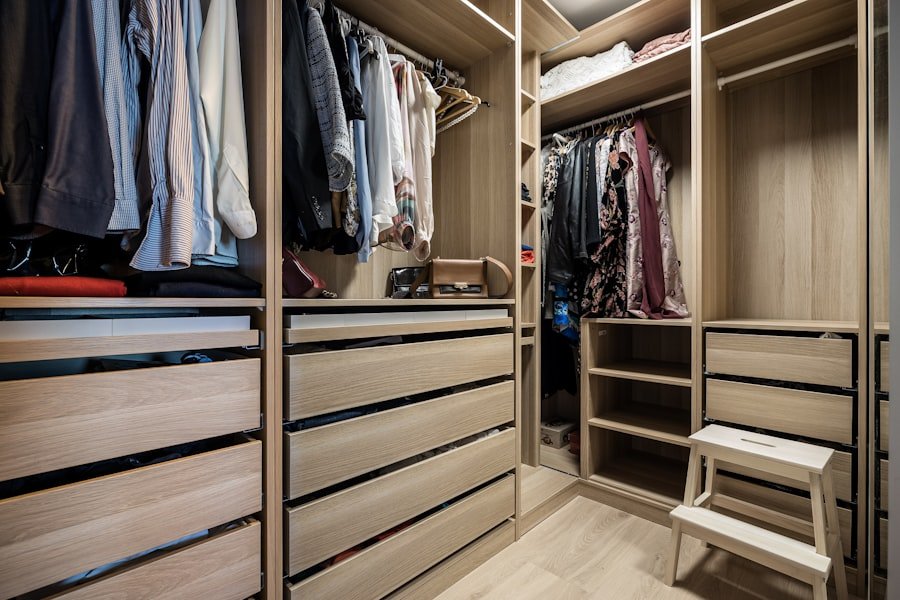
Space-saving techniques are vital for maximizing closet efficiency, especially in smaller spaces where every inch counts. One popular method is to use cascading hangers or tiered hangers that allow multiple garments to hang vertically rather than horizontally. This technique not only saves space but also keeps similar items grouped together for easy access.
Another effective space-saving solution is to utilize vertical space by installing additional shelves or hooks on the inside of closet doors. These areas can be perfect for storing accessories like scarves or belts, freeing up valuable shelf space for larger items. Additionally, consider using multi-functional furniture—such as ottomans with hidden storage or benches with built-in compartments—to create additional storage options within your bedroom or dressing area.
Donation and Recycling Options for Unwanted Clothing
When it comes time to part with unwanted clothing, there are numerous options available for donation and recycling that can benefit both individuals and communities. Local charities often accept gently used clothing donations, providing those in need with access to essential garments. Organizations such as Goodwill or Salvation Army have established programs that not only support local communities but also promote sustainable practices by giving clothes a second life.
For items that are too worn or damaged for donation, consider recycling programs specifically designed for textiles. Many municipalities have established textile recycling initiatives that repurpose old clothing into new materials or products. Additionally, some retailers offer take-back programs where customers can return unwanted clothing in exchange for store credit or discounts on future purchases.
Engaging in these practices not only helps reduce waste but also contributes positively to environmental sustainability.
Benefits of Seasonal Closet Organization
The benefits of seasonal closet organization extend far beyond mere aesthetics; they encompass emotional well-being, financial savings, and environmental impact as well. A well-organized closet can significantly reduce stress during daily routines by simplifying outfit selection and minimizing decision fatigue. When individuals know exactly what they have at their disposal, they are less likely to feel overwhelmed by choices.
Moreover, engaging in seasonal organization fosters a sense of mindfulness regarding personal consumption habits. By regularly evaluating what is owned and making conscious decisions about what to keep or discard, individuals can cultivate a more intentional relationship with their clothing. This practice not only leads to financial savings—by preventing unnecessary purchases—but also promotes sustainability by reducing waste and encouraging responsible consumption patterns.
In conclusion, seasonal closet organization is an invaluable practice that enhances both the functionality of your wardrobe and your overall quality of life. By implementing effective decluttering strategies, utilizing smart storage solutions, and creating capsule wardrobes tailored to each season, individuals can enjoy a more organized and enjoyable dressing experience while contributing positively to their environment and community.
FAQs
What does it mean to organize your closet seasonally?
Organizing your closet seasonally involves sorting and storing clothing and accessories based on the time of year. This means keeping only the current season’s items easily accessible while storing off-season clothes elsewhere to maximize space and reduce clutter.
How can seasonal organization help reduce closet clutter?
By rotating your wardrobe according to the season, you limit the number of items in your closet at one time. This prevents overcrowding, makes it easier to find what you need, and helps maintain a tidy and organized space.
What are some effective methods for storing off-season clothes?
Off-season clothes can be stored in labeled bins, vacuum-sealed bags, or under-bed storage containers. Using clear or labeled storage helps you identify items quickly when it’s time to switch seasons.
How often should I reorganize my closet seasonally?
Typically, reorganizing your closet at the start of each season—spring, summer, fall, and winter—is recommended. This ensures your wardrobe stays relevant to the weather and your needs.
What are some tips to avoid creating clutter when organizing seasonally?
To avoid clutter, only keep items you regularly wear and love, donate or discard unused clothes, use uniform storage containers, and maintain a consistent system for rotating clothes in and out of your closet.
Can seasonal closet organization help with outfit planning?
Yes, having only season-appropriate clothing visible makes it easier to plan outfits quickly and efficiently, reducing decision fatigue and saving time.
Is it necessary to buy special storage solutions for seasonal organization?
Not necessarily. While specialized storage can help, many people successfully use existing containers, shelves, or even repurposed boxes. The key is to keep items organized, labeled, and protected from dust and damage.
How do I decide which clothes to keep or remove during seasonal organization?
Evaluate each item based on fit, condition, frequency of use, and whether it suits your current style. Clothes that no longer fit, are damaged, or haven’t been worn in over a year are good candidates for donation or disposal.
Does seasonal closet organization work for all types of wardrobes?
Yes, seasonal organization can be adapted to any wardrobe size or style. The principles of rotating clothes and minimizing clutter apply universally, though the scale and storage methods may vary.
What are the benefits of organizing a closet seasonally?
Benefits include increased closet space, easier access to current season items, reduced clutter, better garment care, and a more streamlined wardrobe that reflects your current lifestyle and needs.